

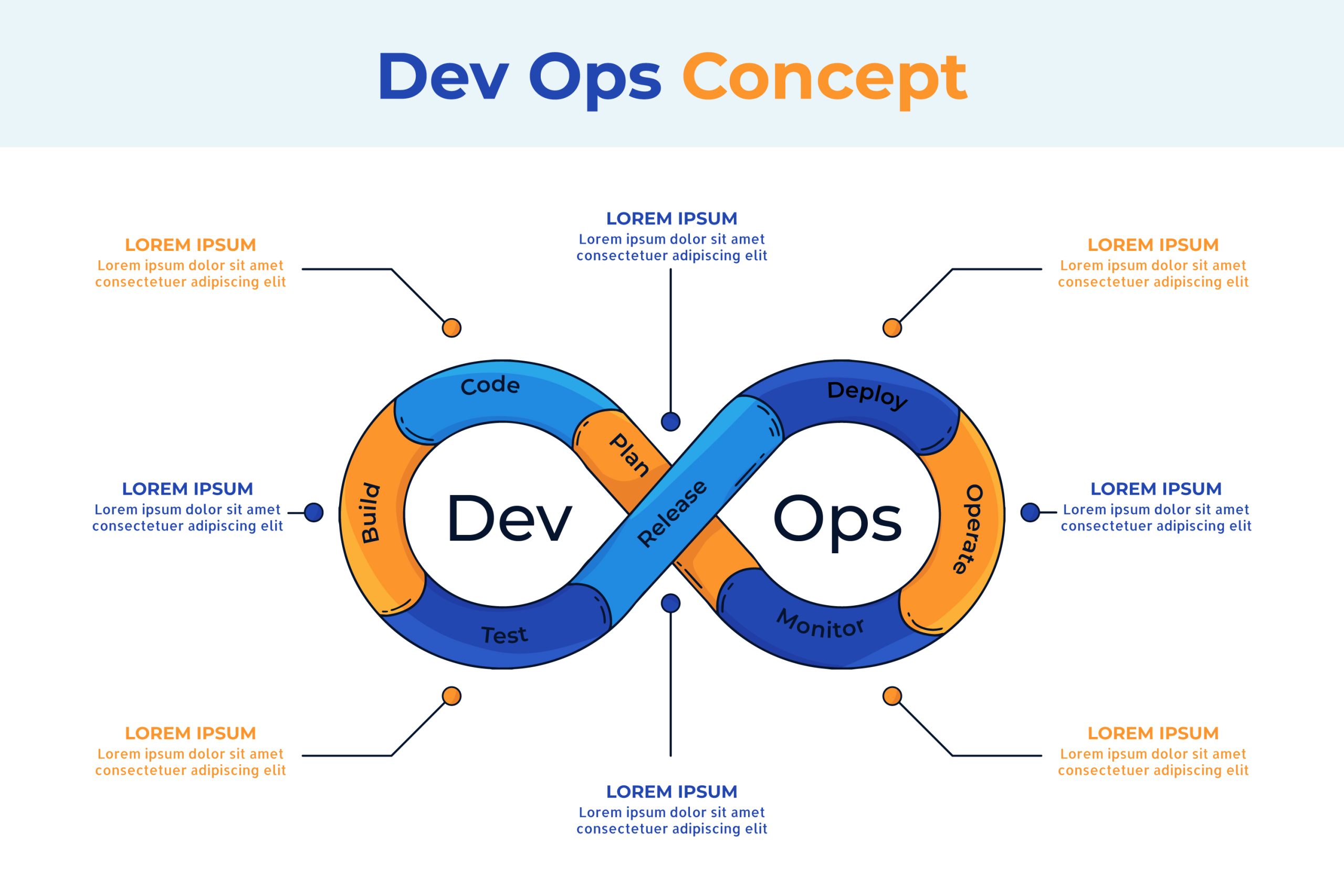
Key Highlights
- Deployments become more reliable by automating builds, testing, and deployments of software.
- Managing infrastructure through version-controlled code helps prevent configuration drift.
- Vulnerabilities before deployment can be identified through dependency scanning, secret detection, and container security checks.
- Tools such as GitHub Actions, Terraform, Docker, Kubernetes, Prometheus, and Grafana support efficient DevOps workflows.
Want better DevOps practices heading into 2027? Here’s the short list. Automate your CI/CD pipeline. Put your infrastructure into code. Build security in early. Watch everything with continuous monitoring. And give developers a decent internal platform so they stop wrestling the tooling. Get those five right and most delivery headaches shrink on their own.
That’s the quick answer. The rest of this post covers the why, some real numbers, a few tool picks, and the mistakes I’d skip.
Where DevOps Stands Right Now
DevOps isn’t a trend anymore. It’s just how software gets shipped. The money tells the same story. Mordor Intelligence puts the market at $16.13 billion in 2025, growing to $51.43 billion by 2031. You can see that on Mordor Intelligence.
Other firms start lower. Radixweb’s roundup cites an estimate of $10.46 billion in 2024, reaching $19.46 billion by 2030. That’s at Radixweb. The totals disagree. The direction doesn’t. giiresearchradixweb
The bigger story is AI. Google’s 2025 DORA report found that 90% of respondents use AI at work, and that AI adoption now links to higher delivery throughput while still hurting delivery stability. Read it on the Google Cloud blog. Their own summary says it neatly: AI speeds up development, and that speed exposes weak spots further down the line. google
So if code now arrives faster, your pipeline, your infrastructure, and your monitoring had better keep up. That idea runs through everything below.
DevOps Best Practices Worth Your Time
Build a CI/CD pipeline you actually trust
A CI/CD pipeline is the assembly line of modern software. Every commit gets built, tested, and prepped for release automatically. When it works, shipping gets boring. Boring is the whole point.
Start simple. Run unit tests on every push. Add integration tests next. Then automate deployment to a staging environment that mirrors production. Save the fancy stuff, like canary releases and automatic rollbacks, for later.
Small, frequent releases beat big scary ones every single time. A bad change inside a ten-line deploy is easy to spot and undo. A bad change buried in a three-month release eats your weekend. Mordor’s report claims mature DevOps teams see a 200% rise in deployment frequency and a 50% fall in time-to-market. Take that with a grain of salt, since it’s market-research framing, but it matches what most teams tell me. giiresearch
Treat infrastructure as code like real code
Infrastructure as code means your servers, networks, and permissions live in version-controlled files instead of someone’s memory or a trail of console clicks. You review changes, test them, and roll them back, just like application code.
Most teams already do some of it. Firefly’s 2025 survey, covered by The New Stack, found that 89% of organizations use IaC, but only about 6% have fully codified their cloud. That’s at The New Stack. Read that twice. Nearly everyone has a Terraform repo, and almost nobody has everything in it. thenewstack
Then there’s drift, where real infrastructure quietly stops matching the code. The same survey notes that less than one-third of organizations continuously monitor drift, while the rest mostly react once something breaks. See Firefly’s report. My advice is boring but works. Pick one tool (Terraform, OpenTofu, or Pulumi all do the job), run it through your pipeline, and schedule regular drift checks. And don’t let people “just fix it in the console” for anything that matters. firefly
Use DevOps automation where it pays off
DevOps automation isn’t about automating everything. It’s about automating whatever people repeat and occasionally get wrong. Spinning up environments, running tests, rotating secrets, scaling services, patching dependencies. If you’ve done something by hand three times, script it.
One warning from experience. If the process is messy, automating it will only makes it messier. Also, keep the human supervision for risky steps until you are confident with the setup.
Shift security left
Security bolted on at the end is slow, expensive, and usually argued about. DevSecOps puts the checks inside the pipeline instead: dependency scanning, secret detection, container image scans, and policy checks on your infrastructure code.
The cost argument is strong. A summary of IBM’s 2025 breach research says a DevSecOps approach brought average breach costs down to $3.89 million, compared with $5.02 million for organizations with limited adoption. Details are at Bright Defense. Begin with the cheap wins, like automatic secret scanning and dependency alerts, then layer on more as you go. brightdefense
Make continuous monitoring non-negotiable
Continuous monitoring is how you learn something broke before your customers tell you. It means tracking metrics, logs, and traces across the whole stack, with alerts that someone actually reads.
The numbers here sting. New Relic’s 2025 Observability Forecast found that high-impact outages carry a median cost of $2 million per hour, which adds up to a median of $76 million a year. The same study says teams with full-stack observability cut that to about $1 million per hour, and only 23% of them hit high-impact outages weekly, versus 40% of teams without it. You can read it on New Relic’s site. It’s a vendor study, so keep that in mind. Even so, the gap is hard to wave away. newrelicnewrelic
Two practical tips. Alert on symptoms users actually feel, like error rates and slow responses, not on every little CPU blip. And trim your tool sprawl. That same report notes the median organization now runs four observability tools, down 27% since 2023. newrelic
Invest in platform engineering
Here’s a practice that quietly went mainstream. Platform engineering means a small team builds an internal platform, with paved roads for deployment, environments, and observability, so product developers don’t each reinvent the wheel.
DORA’s 2025 data says 90% of organizations have adopted at least one platform, and that platform quality tracks closely with how well teams get value out of AI. If your developers spend half the week fighting YAML, a platform is probably your best next investment. google
Measure what matters
You can’t improve what you don’t track. The four classic DORA metrics still do the job: deployment frequency, lead time for changes, change failure rate, and time to restore service. Track them per team and watch the trend. Just don’t turn them into a leaderboard. The second people feel judged by a number, they start gaming it.
DevOps Tools: A Practical Starter Map
There’s no single stack that suits everyone, and tool debates can swallow weeks. So think about DevOps tools by the job they do.
For source control and your CI/CD pipeline, GitHub Actions, GitLab CI, Jenkins, and Azure DevOps cover most needs. For infrastructure as code, Terraform, OpenTofu, Pulumi, and Ansible are the usual suspects. Containers mean Docker and Kubernetes, often with Helm, while GitOps-style deployment tends to lean on Argo CD or Flux. On monitoring and observability, teams often pair Prometheus with Grafana, or pay for something like Datadog or New Relic. And for security scanning, Snyk, Trivy, and SonarQube show up a lot.
My honest rule: pick tools your team can actually run, and that fit your cloud. A well-used Jenkins setup beats a half-adopted shiny platform every time. Also, expect change. The New Stack’s coverage of Firefly’s survey notes that about 5% of respondents have already moved from Terraform to OpenTofu, with another 6% planning to. Tooling shifts, so avoid locking yourself in without a good reason. thenewstack
Mistakes I’d Steer You Away From
Buying tools before fixing culture is the classic one. DevOps is mostly about developers and operations sharing ownership, and no new platform will fix a blame game.
Another is automating on top of chaos, which I mentioned earlier. A third is ignoring cost. Autoscaling and shiny observability stacks can quietly inflate your cloud bill, so look at spend every month.
And please, run incident reviews without blame. When something breaks, ask what in the system allowed it, not who pressed the button. Teams that do this learn faster and hide fewer problems.
How Tambena Consulting Can Help
Plenty of teams know what they should be doing and simply lack the hands to do it. That’s where Tambena Consulting comes in. It offers full-cycle software and DevOps services, and its site lists a broad set of DevOps offerings.
Several of them line up neatly with the practices above. If you’re unsure where to begin, their DevOps consulting services and DevOps transformation services help you map the path. For a faster release process, look at their CI/CD development services. Worried about security gaps? They also offer DevSecOps services.
For visibility into your systems, there are logging and monitoring DevOps services, and if you’re building an internal platform, platform engineering services fit that too. On a specific cloud? They cover AWS, Azure, and GCP, and they handle containerization as well.
To describe your project and ask for a quote, use their contact page.
Final Thoughts
Good DevOps isn’t about owning every tool. It’s about shipping small changes often, catching problems early, and recovering fast when something does go wrong.
Start with your pipeline. Move your infrastructure into code. Add security checks and real monitoring. Build a platform that makes the right way the easy way. Do that steadily, and heading into 2027 you’ll ship faster without losing sleep over it.
FAQs
What are the most important DevOps practices?
A reliable CI/CD pipeline, infrastructure as code, automated testing, built-in security, continuous monitoring, and a culture of shared ownership.
What is a CI/CD pipeline in simple terms?
It’s an automated route that takes code from a developer’s commit through building, testing, and deployment, so releases stay fast and repeatable.
Why does infrastructure as code matter?
It makes infrastructure repeatable, reviewable, and easy to roll back. You also stop having “mystery servers” nobody can rebuild.
What’s the difference between monitoring and observability?
Monitoring tells you something is wrong. Observability helps you work out why, using metrics, logs, and traces together.
Which DevOps tools should a small team start with?
GitHub Actions or GitLab CI for pipelines, Terraform or OpenTofu for infrastructure, Docker for packaging, and Prometheus with Grafana for monitoring.
How do I improve DevOps without a big overhaul?
Pick your biggest pain point, usually slow or flaky deployments, fix that first, and measure the result before moving on.
Sources
| Mordor Intelligence | DevOps market size, growth projections, and claimed improvements in deployment frequency and time-to-market. |
| Radixweb | Alternative estimates of the DevOps market size and projected growth. |
| Google Cloud | Google’s 2025 DORA report findings on AI adoption, delivery throughput, delivery stability, and platform engineering. |
| The New Stack | Firefly’s 2025 infrastructure-as-code survey findings, including IaC adoption, cloud codification, and Terraform-to-OpenTofu migration trends. |
| Firefly | Infrastructure-as-code adoption and infrastructure drift monitoring statistics. |
| Bright Defense | IBM’s 2025 data breach research, used to compare breach costs by level of DevSecOps adoption. |
| New Relic | The 2025 Observability Forecast, including outage costs, observability outcomes, and the number of tools organizations use. |